Understanding the Basics of Distilled and Reverse Osmosis Water
When it comes to choosing clean, safe drinking water, many people find themselves weighing the pros and cons of distilled water versus reverse osmosis (RO) water. While both options are known for their high levels of purification, they achieve this in fundamentally different ways and serve various purposes. For consumers looking to enhance their understanding of these water types and make informed decisions, exploring the distilled water purified water difference is essential. In this article, we will delve into what distilled water and reverse osmosis water are, their production processes, similarities, differences, and ultimately which option may be better for everyday use.
What is Distilled Water?
Distilled water is water that has been purified through the process of distillation, which involves boiling the water to create steam and then condensing that steam back into a liquid. This method effectively removes impurities such as minerals, chemicals, and pathogens, resulting in ultra-pure water that is nearly free of contaminants. Distilled water is often used in medical applications, laboratories, and industrial processes where high purity is required.
What is Reverse Osmosis Water?
Reverse osmosis water is produced by forcing water through a semi-permeable membrane that filters out dissolved salts, heavy metals, chemicals, and other contaminants. This process typically includes multi-stage filtration, using sediment and carbon filters to remove larger particles and substances before the water reaches the RO membrane. The final product is clean, high-quality drinking water that is suitable for everyday consumption.
The Purification Processes Explained
The differences in how distilled and reverse osmosis water are produced play a significant role in their purity and usability. Distillation involves heating water until it vaporizes, then cooling the steam to collect distilled water. This process is effective in removing most impurities, but it does not retain any beneficial minerals, which can lead to a flat taste. In contrast, reverse osmosis employs a combination of pressure and filtration to eliminate contaminants, while often preserving some essential minerals that contribute to a better taste and enhanced flavor.
Key Similarities Between Distilled and Reverse Osmosis Water
Contaminant Reduction Efficiency
Both distilled water and reverse osmosis water are highly effective at removing a wide range of contaminants. Studies have shown that both processes can significantly reduce levels of chlorine, chloramines, heavy metals, volatile organic compounds (VOCs), and even certain pathogens. This makes them suitable for individuals concerned about water quality and safety.
Environmental Impact Compared to Bottled Water
When comparing these purification methods to bottled water, both distilled and reverse osmosis systems are more environmentally friendly. By using either system, households can drastically cut down on plastic waste, as they eliminate the need for single-use bottles. Furthermore, the overall carbon footprint associated with producing, transporting, and recycling bottled water is considerably higher than that of these filtration systems.
Advantages for Home Use
In addition to their contaminant reduction capabilities, both distilled water and reverse osmosis water offer significant benefits for home use. They provide a consistent source of purified water, facilitating long-term water independence. Households that invest in either system can enjoy purified water without needing to rely on store-bought alternatives.
Differences That Matter: Distilled vs. Reverse Osmosis Water
Taste and Usability for Daily Consumption
One of the most notable differences between distilled water and reverse osmosis water is their taste. Distilled water is known for its bland, flat flavor since it lacks minerals that contribute to the taste of water. In contrast, reverse osmosis water tends to have a fresher and smoother taste, particularly when systems incorporate remineralization stages to restore some beneficial minerals.
Energy Consumption and Efficiency
The energy consumption of these purification methods is another point of differentiation. Distillation is notably energy-intensive as it requires continuous heating to produce pure water. Conversely, reverse osmosis systems generally consume less energy, making them more efficient for long-term household use. For example, producing one liter of distilled water can require 0.7–1.0 kWh, while reverse osmosis typically uses less than 0.05 kWh per liter.
Long-term Health Considerations
While distilled water is extremely pure, its lack of minerals can pose health concerns if consumed long-term. Drinking distilled water exclusively may lead to mineral deficiencies over time. In contrast, reverse osmosis water can be a better option for everyday hydration, especially if remineralization occurs, ensuring that users get essential minerals like calcium and magnesium.
Countertop Reverse Osmosis Systems: The Ideal Choice for Urban Living
Advantages of RO Systems for Apartments and Rentals
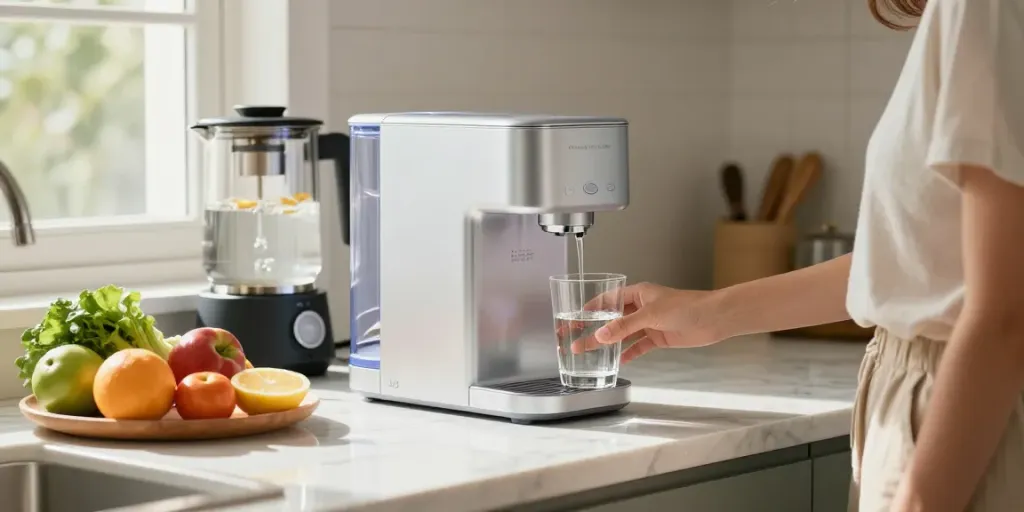
For residents in urban settings, countertop reverse osmosis water purifiers offer unparalleled convenience and functionality. These systems provide purified water without the need for professional installation, making them perfect for apartments, rentals, and shared living spaces. As they require no plumbing modifications, they comply with typical rental restrictions and are portable for users who may relocate.
Product Recommendations for Best Performance
When selecting a reverse osmosis system, it's essential to consider models that fit your lifestyle and water needs. For instance, a hot and cold countertop RO water dispenser with a 4-in-1 composite filter may cater to those who prioritize speed and efficiency, while a 5-in-1 system with UV sterilization provides an extra layer of protection, especially in areas with questionable water sources.
Setup and Maintenance without Plumbing
Easy setup and maintenance are critical features of countertop RO systems. Many of these units come with user-friendly designs that require minimal effort to maintain. Regularly changing filters and sanitizing the system are straightforward processes, which encourages users to keep their water supply safe and pure.
FAQs About Distilled and Reverse Osmosis Water
Is It Better to Drink Reverse Osmosis Water?
Yes, reverse osmosis water is typically considered better for daily drinking due to its balance of purity, taste, and convenience. It effectively removes up to 99% of contaminants while retaining some beneficial minerals when remineralization is included.
Can You Use Distilled Water for Cooking?
While you can use distilled water for cooking, it may not be preferable due to its flat taste and lack of minerals. Many chefs recommend using water that retains some minerals for better flavor in dishes, especially when preparing beverages like tea and coffee.
What Are the Health Implications of Each Type of Water?
Drinking distilled water long-term may lead to mineral deficiencies since it lacks beneficial minerals found in natural water sources. Conversely, reverse osmosis water can help provide a more balanced mineral intake, especially when paired with a remineralization stage.
How Do I Choose Between Distilled and RO Water?
Your choice between distilled and reverse osmosis water should depend on your consumption needs, preferences, and lifestyle. If you seek ultra-pure water for specific applications, distilled may be ideal. However, for everyday hydration and cooking, reverse osmosis is often the superior choice.
Are Reverse Osmosis Systems Worth the Investment?
Definitely. Investing in a reverse osmosis system can provide significant long-term savings on bottled water while improving your water quality and taste. This investment also contributes to a healthier lifestyle and reduces your family's plastic waste significantly.