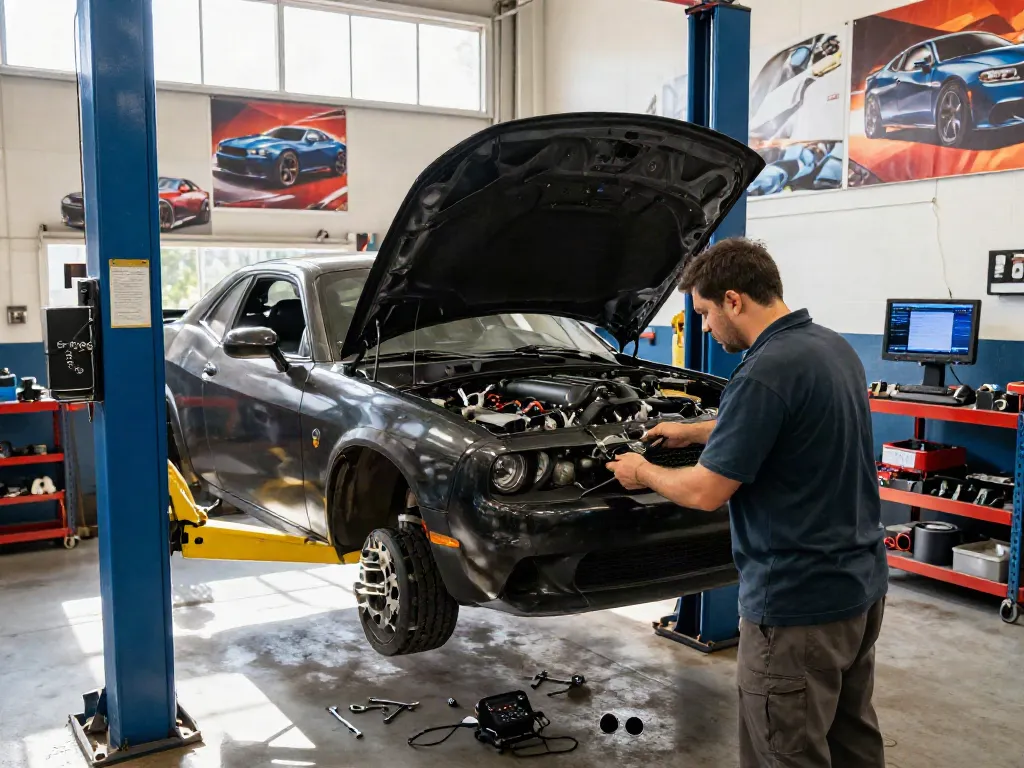
When a used vehicle arrives at a dealer lot — whether from an auction, a trade-in, or a direct purchase — one of the first things that happens is a vehicle history check. The buying desk runs the VIN to see what the history shows before the vehicle is priced, reconditioned, or placed on the lot.
Most buyers do not know this. And most buyers do not realize that the same information the dealer used to price and evaluate the vehicle is available to them as well — independently, before signing anything.
Understanding how dealers use vehicle history reports, what they see, and how to access the same information on your own terms is one of the most useful things any used car buyer can know.
What Dealers Check and Why
The Acquisition Decision
When a dealer considers purchasing a vehicle — at wholesale auction, from a private party, or as a trade-in — the history report is part of the standard acquisition evaluation. The history directly affects how much the dealer pays and whether they buy the vehicle at all.
A vehicle with a clean history commands a higher acquisition price. A vehicle with documented title events, significant accident history, or a questionable mileage timeline is either purchased at a significant discount or passed on entirely.
The critical point for buyers: the dealer knows the history. They priced the vehicle based on it.
The Reconditioning Decision
After acquisition, the history report informs the reconditioning plan. A vehicle with documented front-end collision history gets specific inspection of those components. A vehicle with a service record gap gets specific mechanical evaluation of the systems most likely affected by deferred maintenance.
The history report tells the dealer what to look at. This is the same information a buyer can use to direct their own independent inspection — if they have the report.
The Pricing Decision
Vehicle history directly affects used car pricing. Dealers typically apply implicit discounts for:
- Vehicles with documented accident history (vs. accident-free equivalents)
- Vehicles with higher owner counts
- Vehicles with rental or fleet history
- Vehicles with service record gaps
The price you see on the sticker reflects these adjustments — adjustments the dealer made based on history information you may not have been shown.
What Dealers May Not Proactively Disclose
The Dealer-Provided Report Limitation
Many dealers provide Carfax or vehicle history reports as part of their marketing. "Clean Carfax" is a selling point prominently featured in dealer advertising. This is legitimately useful — but it is not the same as an independent vehicle history check.
The dealer selected which report to show. They may have pulled it at a specific time. They are presenting the findings in the context of a sales conversation where their goal is to complete a transaction.
An independent vehicle history report you run yourself — before the negotiation — is categorically different information. You chose when to pull it. No sales conversation frames the findings.
The Timing Question
Vehicle history databases are updated continuously. A history report pulled three months ago, when the dealer acquired the vehicle, may not reflect an insurance claim filed two months ago by a previous owner. An independent check you run today reflects the current state of the database.
Dealer Disclosure Requirements
The FTC Used Car Rule requires dealers to display a Buyers Guide on every used vehicle disclosing warranty terms and recommending independent inspection. It does not require dealers to proactively disclose every history finding — particularly findings they consider minor or that they believe are offset by the reconditioning they have performed.
The Independent Check: Why It Matters
Running an independent vehicle history check before any dealer purchase gives you:
Current database access: The report reflects today's database state — not the state at the time of the dealer's acquisition check.
Unmediated findings: You read the report directly. No sales representative is present to explain, contextualize, or minimize specific findings.
Your timing: You run it when you want — before the test drive, before the sales conversation, before any emotional investment in the specific vehicle has developed.
Documented negotiating tool: Every specific finding in an independently obtained history report is objective, documented grounds for price discussion. A dealer cannot credibly claim the information is inaccurate when it comes from the same national database their own reports draw from.
For buyers who want to understand the current options for independent vehicle history reports — including what the major providers offer and how their pricing compares — the independent research published atcarfax report deals covers the 2026 market in practical terms.
Using the Independent Report at a Dealership
Before the Visit
Run the history check before driving to any dealership for any specific vehicle. The VIN is typically in the online listing — use it to check the history before investing time in a visit.
If the report reveals significant undisclosed history events, you have saved the trip cost and the emotional investment of a test drive on a vehicle you would not purchase.
During the Inspection
Use the history report to direct your inspection focus. If the report shows a documented left-side collision, look specifically at driver's side panel alignment, paint match, and door gap consistency on that side. If there are service record gaps, ask specific questions about maintenance during those periods.
During Negotiation
Present your findings specifically and factually — not as accusations but as documented information from the national vehicle history database. A dealer who has priced a vehicle assuming the buyer does not have the history report may be more willing to negotiate when the buyer demonstrably does.
Specific history findings support specific price requests:
- Documented accident history → request adjustment proportional to the KBB private party valuation difference for accident history
- Open recall → request completion before delivery or equivalent price reduction
- Service record gaps → request documentation or price adjustment for maintenance uncertainty
The Trade-In Situation
If you are trading in a vehicle at a dealership, run an independent history check on your own vehicle before the appraisal appointment. The dealer will run the check as part of their appraisal process — knowing what they will find before they tell you is a significant negotiating advantage.
Certified Pre-Owned Programs and Vehicle History
Certified Pre-Owned (CPO) programs add a layer of manufacturer or dealer certification to used vehicles. CPO vehicles typically include extended warranty coverage, a multi-point inspection, and — critically — some history requirements.
What CPO History Requirements Cover
Most CPO programs require vehicles to have clean title status — no salvage, rebuilt, flood, or lemon law designations. Many also require accident-free history or limit the number of documented accidents. Some require certain service record density.
What CPO Does Not Guarantee
CPO certification is issued at a point in time based on an inspection and history check at the time of certification. It does not guarantee that findings discovered since that inspection do not exist. An independent history check on a CPO vehicle is still worthwhile — and the clean-history requirement makes the check faster: you are primarily verifying that the CPO criteria were met and remain valid.
Frequently Asked Questions
Q: Does a dealer-provided Carfax mean I do not need my own report? A: Running an independent check remains worthwhile. The dealer's report reflects the database state at the time they pulled it — potentially months ago. Your independent check reflects today's current database. It is also unmediated by a sales context.
Q: Are dealers required to disclose every history finding? A: Requirements vary by state and by finding type. Material defects affecting safety typically require disclosure. Minor history findings in reconditioning documentation may not. The independent history check removes reliance on dealer disclosure choices.
Q: What if my independent report contradicts what the dealer told me about the vehicle? A: Your independently obtained report reflects the national vehicle history database directly. If there is a discrepancy between what the dealer represented and what the independent report shows, that discrepancy is itself a significant finding worth addressing specifically before any purchase commitment.
Q: How do dealers price vehicles with title events? A: Typically with implicit discounts compared to equivalent clean-title vehicles — which is why the dealer's acquisition cost for branded-title vehicles reflects the same discount. The risk to buyers is paying a clean-title price for a vehicle the dealer acquired at a branded-title discount.
Final Thoughts
Dealers use vehicle history reports as a standard professional tool in every acquisition, reconditioning, and pricing decision. Buyers who run independent history checks before any dealer transaction access the same professional information on their own terms — before the sales process, before the negotiation, and before any emotional investment in a specific vehicle.
That access is available at current affordable market pricing. Use it every time.